


Interactive Flat Panel vs Projector — Which Is Right for You?
Choosing between an interactive flat panel (IFP) and a projector is one of the most important technology decisions a school, university, or business in Saudi Arabia will make in 2026. Both options display content on a large screen, yet they differ significantly in image quality, total cost of ownership, interactivity, and long-term reliability. In this guide, we compare the two technologies across 10 key factors so you can make a confident, informed decision. Whether you are upgrading a single classroom or rolling out displays across an entire campus, the information below will help you pick the solution that fits your space, your budget, and your goals.
Image Quality and Brightness
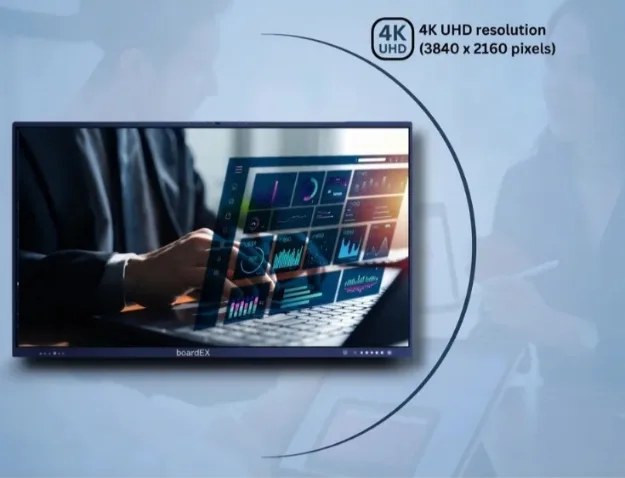
Image quality is often the first thing educators and IT managers notice when comparing these two technologies. An interactive flat panel uses a direct-view LED or LCD screen that produces sharp, vibrant images at 4K UHD resolution (3840 x 2160 pixels). Because the image is generated directly on the screen, it stays crisp and clear from every viewing angle and in every lighting condition.
A projector, in contrast, casts light onto a flat surface. The projected image can look washed out in well-lit classrooms, especially in cities like Riyadh, Jeddah, and Dammam where natural sunlight floods through windows during the school day. To get a usable image, the room typically needs blackout blinds or dimmed lights, which reduces the overall learning environment.
For schools and offices in Saudi Arabia where bright ambient light is the norm, an interactive flat panel with 350 to 500 nits of brightness is the clear winner.
Maintenance and Running Costs
One of the biggest hidden expenses of a projector is the lamp. A typical projector lamp lasts between 3,000 and 5,000 hours. In a busy school that uses the projector for six hours every working day, that lamp will need replacing roughly every one to two years, at a cost of SAR 500 to 1,500 per replacement. Over five years, lamp and filter costs alone can total SAR 2,500 to 7,500.
An interactive flat panel removes this expense entirely. Its LED backlight is rated for over 50,000 hours, which translates to approximately 15 to 20 years of daily classroom use with no bulb to replace. Additionally, there is no filter to clean and no alignment to recalibrate, so ongoing maintenance costs stay close to zero.
The cost of ownership table below compares estimated five-year expenses for both technologies.
Cost Factor | IFP (5-Year Total) | Projector (5-Year Total) |
Initial Purchase | Starting SAR 4,000 (varies by size) | SAR 3,000–8,000 (projector + screen) |
Lamp / Bulb Replacement | SAR 0 (LED has no replaceable lamp) | SAR 2,500–7,500 (2–3 replacements) |
Maintenance & Calibration | SAR 0 | SAR 1,000–3,000 (filters, calibration, repairs) |
Electricity (5 years) | SAR 1,500–2,500 | SAR 2,500–4,000 |
Additional Hardware | SAR 0 (OS, speakers, and camera built in) | SAR 1,500–5,000 (speakers, interactive board, PC) |
Estimated 5-Year Total | SAR 9,500–23,000 | SAR 10,500–27,500 |
As you can see, the projector’s lower upfront price is often offset by recurring costs within just a few years. For a detailed breakdown of interactive flat panel pricing in Saudi Arabia, our team can provide a tailored quotation based on your exact requirements.
Installation Complexity
Installing a projector involves several steps: mounting the unit on the ceiling, running cables through conduits, positioning a pull-down or fixed screen, and calibrating the image to remove keystoning. If the projector or the screen moves even slightly, recalibration is needed. This process usually requires a certified AV technician.
An interactive flat panel simplifies the entire setup. It can be wall-mounted using a standard VESA bracket or placed on a mobile trolley stand for flexible use across multiple rooms. There is no need for ceiling work, no separate screen to position, and no calibration. The panel is ready to use as soon as it is powered on.
Teaching and Collaboration Features
This is where the gap between the two technologies widens considerably. An interactive flat panel is designed as a complete teaching and collaboration tool, not just a display. Modern IFPs, such as the boardEX Interactive Flat Panel, come with a built-in Android and Windows-compatible operating system, which means teachers and presenters can run apps, browse the web, and annotate lessons directly on the panel without connecting a laptop.
Key collaboration features that come built into an IFP include:
- Multi-touch support (up to 40 simultaneous touch points), which allows several students or team members to interact with the screen at the same time
- Wireless screen sharing from laptops, tablets, and smartphones, so presenters can cast their screens without cables
- AI-powered whiteboard application with smart handwriting recognition, shape correction, and autosave to the cloud
- Split-screen view that lets teachers display two different sources side by side, for example a textbook page and a video
- Built-in speakers, camera, and microphone for video conferencing and hybrid learning
A projector, by comparison, simply displays whatever is sent to it from an external device. It does not offer touch, annotation, or any built-in software. To achieve even basic interactivity, a school would need to purchase an additional interactive whiteboard overlay, which adds cost and complexity.
Our Recommendation
For schools, universities, and businesses in Saudi Arabia that are planning a permanent display upgrade, we recommend the interactive flat panel. The combination of 4K clarity, built-in touch interactivity, zero-maintenance LED technology, and a lower total cost of ownership makes it the smarter investment for the long run.
boardEX interactive flat panels are available across Riyadh, Jeddah, and Dammam, with professional installation, on-site training, and dedicated after-sales support included. Whether you need a single panel for a meeting room or a full-campus rollout, our team will help you choose the right size and configuration for your space.
Frequently Asked Questions
An interactive flat panel is a standalone 4K touchscreen with a built-in operating system and collaboration tools. A projector simply casts an image onto a wall and needs an external computer to work.
An IFP lasts over 50,000 hours (15 to 20 years). A projector lamp lasts 3,000 to 5,000 hours and needs replacing every one to two years.
The upfront cost is higher, but the five-year total cost of ownership is often lower because there are no lamp replacements, no filter changes, and no calibration fees.
Not well. Projected images wash out in sunlit rooms. An interactive flat panel stays fully visible in any lighting, which makes it ideal for classrooms in Riyadh, Jeddah, and Dammam.
boardEX supplies 4K interactive flat panels across Riyadh, Jeddah, and Dammam,with professional installation, training, and after-sales support.